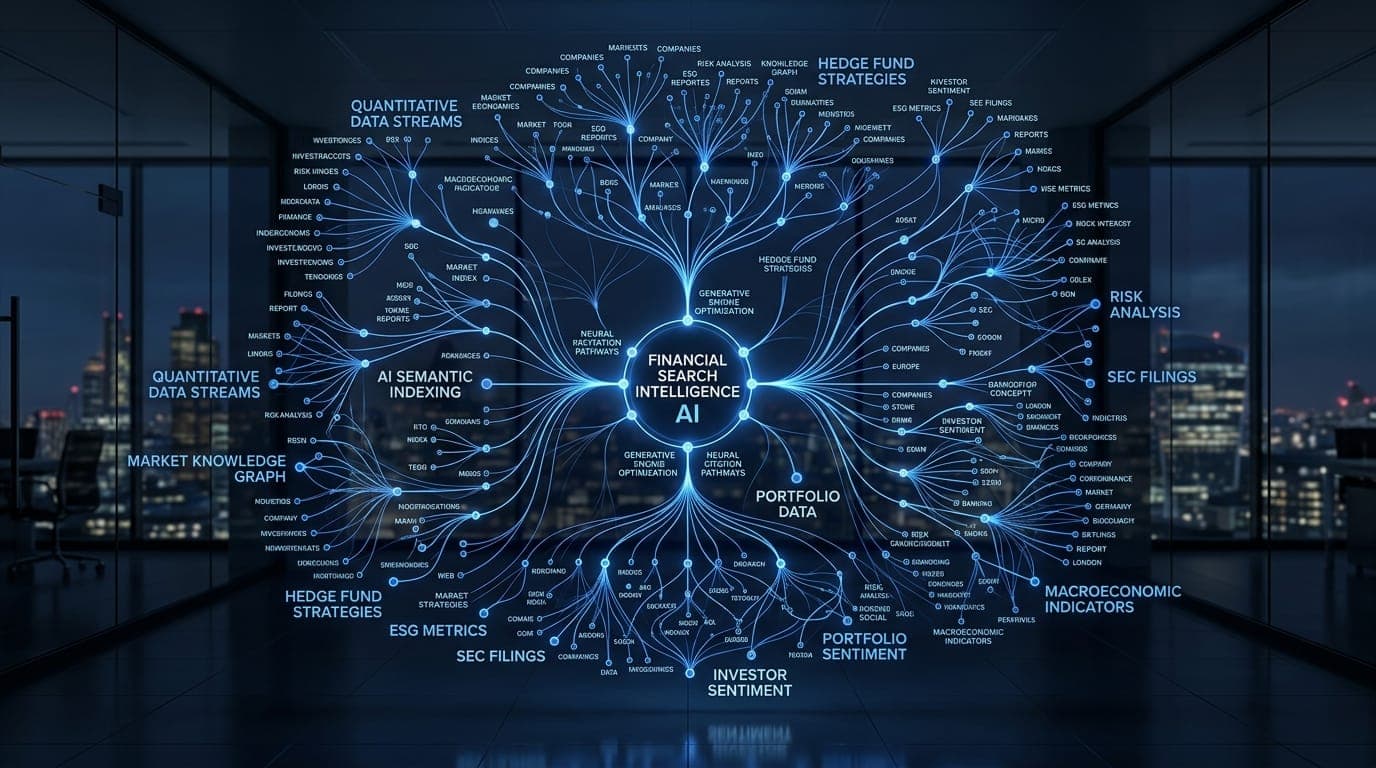
Large Language Model Optimization (LLMO) is the systemic process of preparing, formatting, and distributing an organization's proprietary knowledge base to maximize positive association and accurate retrieval during LLM pre-training, fine-tuning, and Retrieval-Augmented Generation (RAG).
What Is the Role of LLMO in Enterprise FinTech and Institutional Finance?
While traditional SEO targets human searchers typing queries into Google, LLMO targets autonomous AI agents, enterprise search systems, and foundation models evaluating software vendors, custody partners, and advisory practices. If an enterprise buyer asks an AI agent to "benchmark institutional custody APIs with SOC 2 Type II compliance," LLMO ensures your technology platform is recognized and cited.
| LLMO Layer | Technical Mechanism | Institutional Impact |
|---|---|---|
Semantic Manifests (llms.txt) |
Lightweight markdown summary at /llms.txt |
Zero-latency ingestion by AI crawlers without HTML rendering overhead. |
| Entity Disambiguation | Wikidata, OpenCorporates, and EDGAR entity links | Prevents model hallucination and anchors brand to verified industry registry nodes. |
| Vector Chunking Discipline | Clear H2/H3 chunk boundaries and metadata headers | Prevents contextual fragmentation when enterprise RAG systems split documentation. |
| Zero-Retention Security | Enterprise API gateways with ZDR contracts | Guarantees client PII is never absorbed into public foundation training weights. |
How Do We Structure Machine-Readable Knowledge Bases for LLMs?
To optimize for LLM consumption, documentation must adhere to four machine-first formatting conventions:
- Token Efficiency: Clean markdown devoid of extraneous advertising scripts, tracker payloads, or heavy CSS wrappers, dramatically lowering the token cost for LLM context windows.
- Factual Density & Low Temperature Framing: Write in clear, declarative sentences. Avoid metaphors, irony, or promotional hyperboles that degrade vector embedding clarity.
- Consistent Semantic Hierarchies: Maintain strict nesting (
H1 > H2 > H3) so that vector chunking algorithms can infer parent-child topic relationships automatically. - Machine-Readable JSON Endpoints: Provide companion JSON metadata (such as
llms.json) containing structured firmographic parameters (AUM tiers, jurisdictions, supported API integrations) for autonomous procurement bots.